Reactive Ocular and Balance Control in Immersive Visual Flows: 2D vs. 3D Virtual Stimuli
Abstract
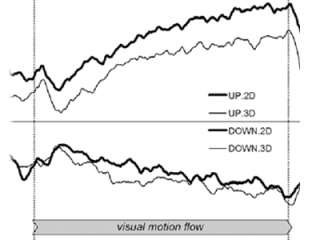
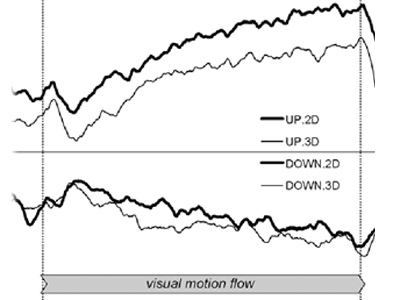
The control of gaze and balance strongly depend on the processing of visual cues. The aim of this study is to assess the effects of the dynamic 2D and 3D visual inputs on the oculomotor and balance reactive control. Thirteen subjects were immersed in a virtual environment using 10 different 2D/3D visual flow conditions. Analysis of eye movement and postural adjustments shows that 2D and 3D flows induce specific measurable behavioral responses.
Fichier principal
 CTCR09-OMJD-FINAL.pdf (372.89 Ko)
Télécharger le fichier
CTCR09-OMJD-FINAL.pdf (372.89 Ko)
Télécharger le fichier
 CRCM09-vignette.png (54.25 Ko)
Télécharger le fichier
CRCM09-vignette.png (54.25 Ko)
Télécharger le fichier
Origin : Files produced by the author(s)
Format : Figure, Image
Loading...